If you’ve spent months bouncing between doctors, hearing “your bloodwork looks normal” while your body feels like it lost a fight you don’t remember having, you already know why this question matters so much. So — what is fibromyalgia, really?
Fibromyalgia is a chronic condition that causes widespread pain, deep fatigue, sleep problems, and cognitive difficulties (often called “fibro fog”). It happens because the central nervous system amplifies pain signals — not because of damage to your muscles, joints, or organs. There’s no cure yet, but it’s manageable, and it is not life-threatening.
What Is Fibromyalgia, in Plain Terms?
Fibromyalgia (sometimes called fibromyalgia syndrome, or FMS) is a long-term pain condition. According to the American College of Rheumatology, it affects roughly 2–4% of people worldwide, and it’s diagnosed far more often in women than in men — though men and even children can develop it too.
Here’s the part that trips people up: fibromyalgia doesn’t show up on an X-ray, MRI, or standard blood panel. That’s not because it’s imaginary — it’s because the problem isn’t structural. Researchers now classify it as a “central sensitization” or “nociplastic pain” disorder, meaning the brain and spinal cord process pain and sensory signals abnormally. Your nervous system essentially turns the volume up on pain, touch, sound, and light, so ordinary sensations register as overwhelming or painful.
Mayo Clinic describes it simply: fibromyalgia changes how your brain and spinal cord handle painful and nonpainful signals, increasing your overall sensitivity. That’s the mechanism — not inflammation, not joint erosion, not an autoimmune attack on your tissue.
What Does Fibromyalgia Actually Feel Like?
Ask ten people with fibromyalgia to describe a flare, and you’ll get ten different metaphors — but they tend to circle the same territory. Many describe it as a bone-deep ache that never fully switches off, like the soreness after a hard workout you never did, sitting on top of the kind of exhaustion sleep doesn’t touch.
It’s common to wake up after eight hours of sleep feeling like you got two. Simple tasks — carrying groceries, sitting through a meeting, standing in a hot shower — can leave you flattened for the rest of the day. And then there’s “fibro fog”: misplaced words, losing your train of thought mid-sentence, walking into a room and forgetting why.
None of that shows up in a lab result. That mismatch — feeling awful while looking and testing “fine” — is one of the hardest parts of the condition, and it’s a big reason fibromyalgia is often called an “invisible illness.”
Core Symptoms of Fibromyalgia
Not every symptom carries equal diagnostic weight. Here’s how to think about it:
Core symptoms (used in diagnosis):
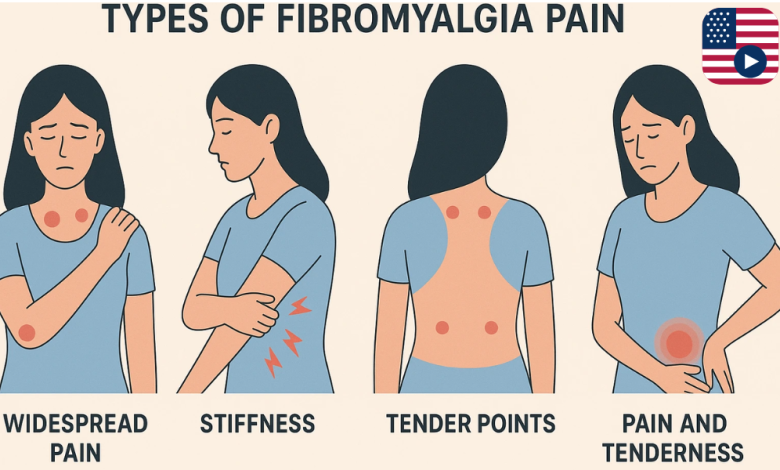
- Widespread pain lasting three months or longer, present on both sides of the body and above and below the waist
- Persistent fatigue, even after a full night’s sleep
- Non-restorative sleep or frequent waking
- Cognitive difficulties (“fibro fog”) — trouble concentrating, memory lapses
Commonly co-occurring symptoms (not required for diagnosis, but frequently reported):
- Headaches or migraines
- Irritable bowel syndrome (IBS) or bloating
- Numbness or tingling in the hands and feet
- Increased sensitivity to light, noise, temperature, and odors
- Jaw pain or TMJ disorder
- Anxiety or low mood
- Restless legs syndrome
The distinction matters because a lot of competitor content lumps everything into one undifferentiated list, which makes it harder to know what actually points toward a fibromyalgia diagnosis versus what’s just commonly along for the ride.
What Causes Fibromyalgia?
Here’s the honest answer: nobody knows the exact cause yet. What researchers do know is that it’s rarely one single trigger — it’s usually a combination of genetic vulnerability plus a triggering event.
Contributing factors include:
- Genetics. The CDC notes that fibromyalgia tends to run in families; having a close relative with the condition raises your risk.
- Physical trauma or injury. Car accidents, surgeries, or repetitive strain sometimes precede the onset of symptoms.
- Infections. Certain viral or bacterial illnesses appear to act as triggers in some people, and researchers have also been studying a possible link between long COVID and new-onset fibromyalgia-like symptoms.
- Prolonged emotional stress or trauma. Chronic stress can dysregulate the nervous system over time.
- Other health conditions. People with rheumatoid arthritis, lupus, or osteoarthritis have a higher likelihood of also developing fibromyalgia.
What’s notably absent from that list: poor diet alone, “being out of shape,” or a personal failing of any kind. Fibromyalgia is a real, recognized medical condition — a fact worth stating plainly, because plenty of people with fibromyalgia have been told otherwise by someone who should have known better.
How Is Fibromyalgia Diagnosed?
There’s no blood test or scan that confirms fibromyalgia, which makes diagnosis frustrating and, on average, slow — many patients see multiple providers before getting an answer. Here’s roughly how the process works:
- Symptom history. Your doctor asks how long you’ve had pain, where it’s located, and how it affects daily function.
- Physical exam. They’ll check for tenderness across your body rather than searching for visible damage.
- Ruling out other conditions. Basic bloodwork and sometimes imaging rule out thyroid disease, rheumatoid arthritis, lupus, or other explanations with overlapping symptoms.
- Scoring criteria. Many providers use the American College of Rheumatology’s criteria, which combines two measures: the Widespread Pain Index (how many body regions hurt) and the Symptom Severity Score (how bad your fatigue, sleep issues, and cognitive symptoms are). Meeting the threshold on both, alongside symptoms present for at least three months, supports a diagnosis.
If your provider isn’t familiar with this scoring system, it’s reasonable to ask about it directly or to seek a rheumatologist who specializes in fibromyalgia.
Fibromyalgia vs. Similar Conditions
Fibromyalgia gets confused with several other conditions because the symptoms overlap. Here’s a side-by-side comparison:
| Feature | Fibromyalgia | Chronic Fatigue Syndrome (ME/CFS) | Rheumatoid Arthritis | Lupus |
| Primary symptom | Widespread pain | Profound, unrelenting fatigue | Joint inflammation and swelling | Systemic inflammation, organ involvement |
| Visible on tests/imaging? | No | No | Yes (joint damage, inflammation markers) | Yes (autoantibodies, organ markers) |
| Autoimmune? | No (debated, not classified as one) | No | Yes | Yes |
| Joint damage? | No | No | Yes, progressive | Possible, varies |
| Fatigue present? | Yes | Yes (dominant symptom) | Sometimes | Often |
The overlap between fibromyalgia and ME/CFS in particular is significant enough that some researchers believe the two conditions share underlying mechanisms — but they remain distinct diagnoses with different diagnostic criteria.
Is Fibromyalgia an Autoimmune Disease?
No — at least not by current classification. This is genuinely one of the more contested questions in the field, so it’s worth being precise. Fibromyalgia doesn’t cause the tissue-destroying inflammation seen in autoimmune diseases like rheumatoid arthritis or lupus, and it doesn’t produce the antibody markers doctors use to diagnose those conditions.
That said, some newer research has explored whether immune dysfunction plays a supporting role, and fibromyalgia does occur more often in people who already have an autoimmune condition. The scientific consensus, as reflected by the American College of Rheumatology and Mayo Clinic, currently places fibromyalgia in its own category — a central nervous system pain-processing disorder rather than an autoimmune one. That could shift as research continues, but it hasn’t yet.
How Is Fibromyalgia Treated?
There’s no cure, and it’s worth being upfront about that rather than overselling any single fix. Treatment focuses on managing symptoms and improving day-to-day function, usually through a combination of approaches rather than one silver bullet.
Medications (prescribed and monitored by a doctor):
| Drug class | Examples | What it targets |
| SNRIs (antidepressants) | Duloxetine (Cymbalta), Milnacipran (Savella) | Pain and fatigue, via neurotransmitter balance |
| Anti-seizure medications | Pregabalin (Lyrica), Gabapentin | Overactive nerve signaling |
| Tricyclic antidepressants | Amitriptyline | Pain and sleep quality |
| Muscle relaxants | Cyclobenzaprine (Flexeril) | Muscle tension, sleep |
Notably, opioids and standard anti-inflammatory painkillers tend to work poorly for fibromyalgia, since the condition doesn’t involve tissue inflammation the way arthritis does.
Non-drug approaches that show consistent benefit:
- Low-impact aerobic exercise (walking, swimming, water aerobics) — often the single most effective long-term intervention, even though it can feel counterintuitive when moving hurts
- Cognitive behavioral therapy (CBT)
- Physical therapy
- Sleep hygiene routines
- Stress-reduction practices like mindfulness or gentle yoga
None of these work overnight, and what helps one person barely moves the needle for another. Most people land on a personalized combination through trial, error, and a fair amount of patience.
Living With Fibromyalgia: What It’s Actually Like Day to Day
Managing fibromyalgia often comes down to a skill nobody teaches you: pacing. Overdo it on a good day — a full day of errands, a long workout, a late night — and the payback can hit 24 to 48 hours later, sometimes disproportionate to what you actually did. People who live with the condition often learn to break tasks into smaller chunks and build in rest before they think they need it, rather than after.
Flare-ups are also rarely random. Common triggers include poor sleep, emotional stress, weather and barometric pressure changes, infections, and overexertion. Keeping a simple symptom log — noting sleep, stress, activity, and weather alongside pain levels — helps a lot of people spot their personal patterns within a few weeks.
The emotional side deserves equal attention. Living with an invisible illness that others sometimes dismiss (“but you don’t look sick”) takes a toll, and it’s part of why anxiety and low mood are so common alongside fibromyalgia. Support groups, whether in person or online, are one of the more underrated tools — connecting with people who don’t need the condition explained to them can be a genuine relief.
Fibromyalgia Myths vs. Facts
| Myth | Fact |
| “It’s all in your head.” | It’s a recognized nervous system disorder with measurable changes in pain processing, acknowledged by the CDC, NIH, and major medical associations. |
| “Fibromyalgia will shorten your life.” | It’s not life-threatening and doesn’t reduce life expectancy, according to research published via the National Institutes of Health. |
| “It’s an autoimmune disease.” | Current evidence classifies it as a central sensitization disorder, not an autoimmune condition. |
| “It only affects women.” | It’s far more common in women, but men and children can develop it too. |
| “There’s nothing you can do about it.” | Symptoms are manageable through medication, exercise, therapy, and lifestyle adjustments, even without a cure. |
Read More: https://usabigmedia.com/5150-meaning/
FAQs
What is fibromyalgia and what causes it?
Fibromyalgia is a chronic disorder causing widespread pain, fatigue, and cognitive difficulties due to how the central nervous system processes pain. The exact cause is unknown, but genetics, infections, physical trauma, and prolonged stress are all believed to contribute.
What are the first signs of fibromyalgia?
Early signs typically include persistent widespread muscle pain, unrefreshing sleep, and unusual fatigue that doesn’t improve with rest. Cognitive fog and heightened sensitivity to light or noise often follow.
What triggers a fibromyalgia flare-up?
Common triggers include stress, poor sleep, physical overexertion, weather or pressure changes, hormonal shifts, and illness or infection.
Is fibromyalgia a disability?
It can qualify as a disability in some cases if symptoms significantly limit your ability to work or function, but this depends on severity and is evaluated case by case under programs like the U.S. Social Security Administration’s disability criteria.
Can fibromyalgia be cured?
No, there’s currently no cure. However, most people can significantly reduce symptoms and improve quality of life through medication, exercise, and lifestyle management.
How is fibromyalgia diagnosed?
Diagnosis is based on symptom history, a physical exam, and ruling out other conditions, often supported by the American College of Rheumatology’s Widespread Pain Index and Symptom Severity Score.
Does fibromyalgia shorten life expectancy?
No. Research indicates fibromyalgia is not degenerative or fatal and does not reduce life expectancy, though it can significantly affect quality of life if unmanaged.
Can men get fibromyalgia?
Yes. While it’s diagnosed far more often in women, men and children can also develop fibromyalgia, and it may be underdiagnosed in men due to differences in symptom presentation and reporting.
The Bottom Line
Fibromyalgia is real, it’s common, and it’s manageable even though it isn’t curable. If today’s search for “what is fibromyalgia” started because something feels wrong and no one’s given you a straight answer, that’s worth pushing on. Track your symptoms, bring specifics to your next appointment, and don’t hesitate to ask for a rheumatologist referral if your current provider seems unfamiliar with the diagnostic criteria. Getting a name for what you’re experiencing is often the first real step toward getting it under control.