You’re halfway through dinner, maybe you went back for seconds, and suddenly there’s a burning feeling climbing up from your chest toward your throat. That’s usually heartburn, and it’s one of the most common digestive complaints out there. Recognizing heartburn symptoms early, and knowing which ones are harmless versus which ones need medical attention, can save you a lot of unnecessary worry (or, in rare cases, get you help faster when it actually matters).
What Are the Main Symptoms of Heartburn?
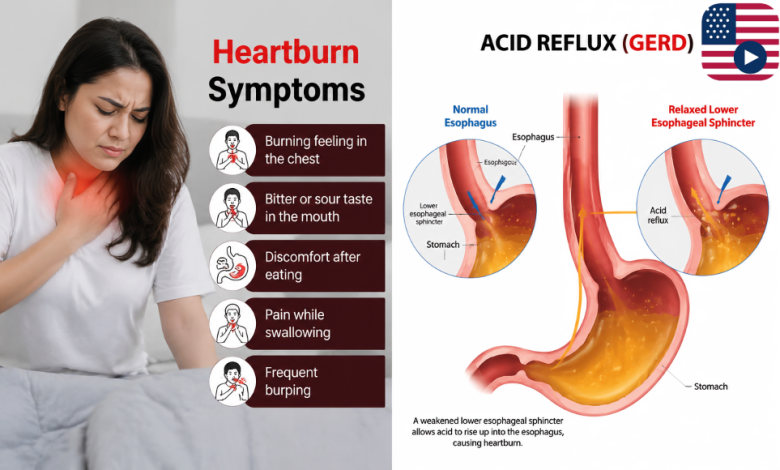
Heartburn typically feels like a burning sensation in the chest, just behind the breastbone, that often gets worse after eating, when lying down, or when bending over. It may come with a sour or bitter taste in the mouth, a feeling of food coming back up, and sometimes a mild cough or sore throat. Most episodes last anywhere from a few minutes to a couple of hours and ease up once the stomach finishes digesting.
What Heartburn Actually Feels Like
If you’ve never had it before, the first episode can be genuinely alarming. The sensation sits high in the chest, right around where your heart is, which is exactly why it earned the name “heartburn” even though your heart has nothing to do with it.
People usually describe it as a warm or burning discomfort that starts low in the chest and creeps upward. Some say it feels like there’s a small fire behind the breastbone. Others notice it more as pressure or tightness that shows up right after a big or spicy meal. It’s not unusual for the sensation to reach the back of the throat, sometimes bringing along a sour or acidic taste that lingers even after you’ve stopped eating.
What makes heartburn a little tricky is that it doesn’t always show up the same way twice. One episode might be a quick five-minute flare after eating too fast. Another might drag on for an hour or two, especially if you lie down too soon after a meal or fall asleep on a full stomach.
Common Heartburn Symptoms
Here’s what shows up most often when someone is experiencing a typical episode of heartburn.
Classic Symptoms
- A burning sensation behind the breastbone, often starting after eating
- Discomfort that gets worse when lying flat, bending over, or straining
- A sour, bitter, or acidic taste in the back of the mouth
- A sensation of food or liquid coming back up (regurgitation)
- Mild bloating or a feeling of fullness in the upper stomach
- A burning feeling in the throat, sometimes described as a lump sensation
Less Obvious (But Still Common) Symptoms
Heartburn doesn’t always announce itself with a dramatic burning chest. Stomach acid that travels up into the throat or airway can trigger symptoms that have nothing to do with the chest at all, including:
- A dry, nagging cough that shows up for no obvious reason
- Hoarseness or a scratchy voice, especially in the morning
- A sore throat that doesn’t respond to typical remedies
- Bad breath or a metallic taste
- Worsening asthma symptoms or a wheezing sensation
- Mild nausea, particularly after rich or fatty meals
These “silent” or atypical symptoms are easy to miss because they don’t feel like classic acid reflux. If you keep clearing your throat, losing your voice, or coughing after meals with no cold or allergy in sight, acid reflux is worth considering as a cause.
What Causes These Symptoms in the First Place
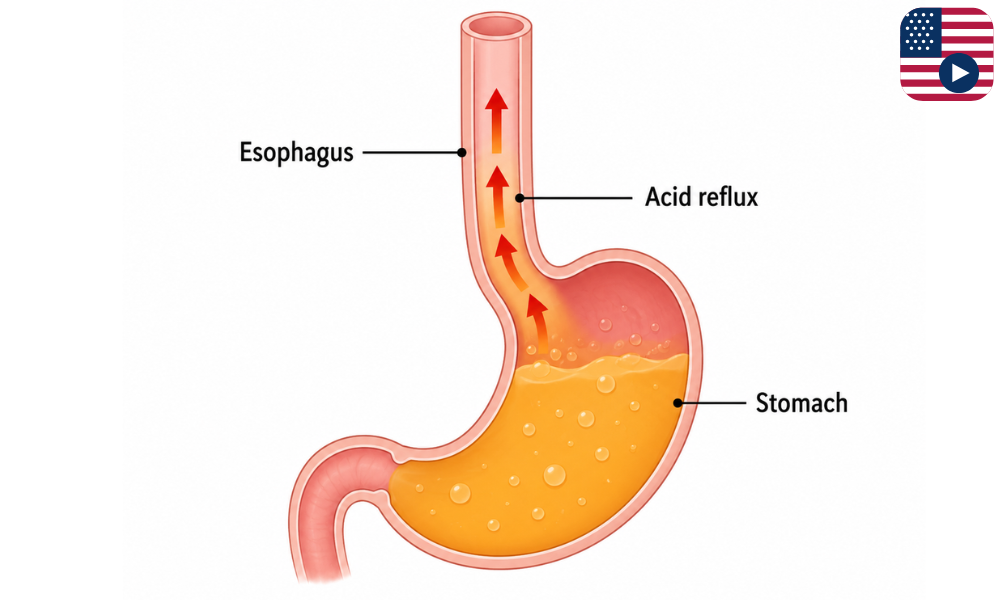
Heartburn happens when the lower esophageal sphincter (LES), the ring of muscle that’s supposed to keep stomach acid where it belongs, relaxes or weakens at the wrong time. When that happens, acid escapes upward into the esophagus, which isn’t built to handle it the way the stomach lining is. The result is that familiar burning sensation.
A few things make this more likely to happen:
- Eating large meals or eating too quickly
- Spicy, fatty, or fried foods
- Citrus fruits, tomato-based foods, chocolate, and peppermint
- Caffeine, alcohol, and carbonated drinks
- Lying down or exercising right after eating
- Excess weight around the abdomen, which adds pressure on the stomach
- Pregnancy, due to hormonal shifts and physical pressure from the growing uterus
- Smoking, which can loosen the LES over time
- Certain medications, including some pain relievers, sedatives, and blood pressure drugs
Occasional heartburn from one of these triggers is normal and generally nothing to worry about. It’s the frequency and pattern that start to matter more, which we’ll get into next.
Heartburn vs. Heart Attack: How to Tell the Difference
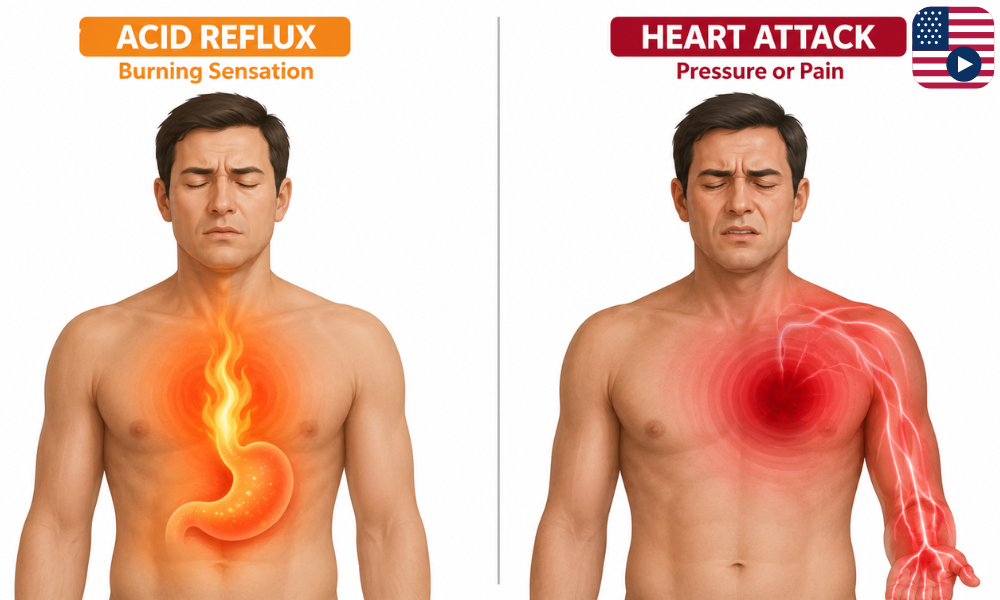
This is the comparison people search for the most, and for good reason. Chest discomfort is unsettling, and the overlap between heartburn and cardiac symptoms is real enough that even doctors sometimes need tests to be sure. Still, there are some useful differences to keep in mind.
| Symptom or Detail | Heartburn | Possible Heart Attack |
| Type of sensation | Burning, warm, rising feeling | Pressure, squeezing, or crushing feeling |
| Location | Behind the breastbone, may rise to throat | Center or left side of chest, may radiate to arm, jaw, neck, or back |
| Timing | Usually after eating, worse lying down or bending over | Can occur at rest or during exertion, not tied to meals |
| Accompanying signs | Sour taste, regurgitation, mild cough | Shortness of breath, cold sweat, dizziness, nausea |
| Response to antacids | Often improves within minutes | Typically does not improve with antacids |
| Duration | Minutes to a couple of hours | Persistent, doesn’t ease up on its own |
A detail worth flagging: women don’t always experience textbook heart attack symptoms. Instead of the classic crushing chest pain, they may notice shortness of breath, unusual fatigue, nausea, or pain in the back or jaw, symptoms that can be brushed off as heartburn or stress. If there’s any doubt, especially with risk factors like high blood pressure, diabetes, or a family history of heart disease, it’s safer to get checked out than to assume it’s just acid.
If you ever experience severe chest pain or pressure, especially combined with pain in the arm or jaw, shortness of breath, sweating, or dizziness, treat it as an emergency and call for help immediately. This is not a symptom to wait out.
Heartburn vs. GERD vs. Acid Reflux vs. Indigestion
These terms get used interchangeably, but they’re not quite the same thing, and understanding the difference helps you know when a symptom is “normal” versus something to bring up with a doctor.
Acid reflux is the underlying event, stomach acid backing up into the esophagus. Heartburn is the burning symptom that acid reflux produces. GERD (gastroesophageal reflux disease) is the diagnosis given when acid reflux happens often enough, generally more than twice a week, to be considered a chronic condition rather than an occasional annoyance. Indigestion, or dyspepsia, is a broader term for general upper stomach discomfort, bloating, or an upset stomach after eating, and it can happen with or without any acid reflux involved.
A simple way to think about frequency and what it means:
- Once in a while (a few times a month): Normal, usually tied to a specific meal or trigger. Lifestyle tweaks and occasional antacids are typically enough.
- Twice a week or more, over several weeks: Starting to look like GERD. Worth mentioning to a doctor, especially if it’s affecting sleep or daily life.
- Daily, or not responding to over-the-counter treatment: A stronger signal that it’s time for a proper evaluation, which may include tests like an endoscopy or pH monitoring.
Heartburn Symptoms in Special Situations
During Pregnancy
Heartburn is extremely common in pregnancy, largely thanks to hormonal changes that relax the LES, combined with physical pressure from the growing uterus pushing up on the stomach. It tends to get more noticeable in the second and third trimesters and typically resolves after delivery. Sleeping propped up slightly and avoiding large meals late in the evening tends to help, though it’s always worth checking with a healthcare provider before starting any new medication during pregnancy.
At Night
Nighttime heartburn deserves its own mention because lying flat makes it much easier for acid to travel upward, and gravity isn’t there to help push it back down. Many people notice their worst episodes happen thirty minutes to an hour after lying down following a late dinner. A few practical adjustments make a real difference here: finishing eating at least three hours before bed, sleeping on the left side rather than the right (this position seems to keep the stomach lower than the esophagus), and raising the head of the bed by a few inches using risers rather than just piling on pillows, which can actually increase abdominal pressure.
In Older Adults
As people age, the LES can weaken naturally, and other factors like reduced saliva production, more frequent medication use, and slower digestion can all make heartburn more frequent or more intense. Older adults are also more likely to experience “silent” symptoms, such as a chronic cough or hoarseness, without the classic burning sensation, which is one reason unexplained respiratory symptoms in this age group are sometimes traced back to acid reflux.
How Long Do Heartburn Symptoms Usually Last
A typical episode lasts anywhere from a few minutes to about two hours, generally easing off once the stomach has finished digesting the meal that triggered it. If symptoms are dragging on for several hours, happening almost daily, or waking you up at night on a regular basis, that pattern points more toward GERD than a one-off case of heartburn.
When to See a Doctor
Most heartburn is manageable at home, but certain signs mean it’s time to loop in a professional rather than reaching for another antacid.
- Heartburn happening more than twice a week
- Symptoms that don’t improve with over-the-counter medication
- Difficulty or pain when swallowing
- Unexplained weight loss
- Persistent nausea or vomiting, especially if it looks like coffee grounds or contains blood
- Black, tarry, or bloody stools
- A voice that stays hoarse or a cough that won’t clear up
- Chest pain that feels different from your usual heartburn, especially with sweating, shortness of breath, or pain spreading to the arm or jaw (seek emergency care immediately)
None of these symptoms are meant to cause panic on their own, but taken together or if they persist, they’re worth a real conversation with a doctor rather than guesswork.
Managing and Relieving Heartburn Symptoms
Once you’ve ruled out anything urgent, most heartburn responds well to a mix of lifestyle changes and, when needed, over-the-counter medication.
Lifestyle steps that tend to help:
- Eating smaller portions instead of large meals
- Avoiding personal trigger foods (common ones include spicy dishes, citrus, tomato-based sauces, fried food, chocolate, and mint)
- Cutting back on caffeine, alcohol, and carbonated drinks
- Waiting at least a few hours after eating before lying down
- Losing excess weight if it’s a factor, since abdominal pressure makes reflux worse
- Avoiding tight clothing around the waist
- Managing stress, which can indirectly worsen symptoms through eating habits and increased sensitivity to discomfort
When lifestyle changes aren’t quite enough, three general categories of over-the-counter medication are commonly used: antacids, which neutralize acid quickly but briefly; H2 blockers, which reduce acid production and last longer; and proton pump inhibitors, which reduce acid production more strongly and are usually used for a defined short course rather than indefinitely. A pharmacist or doctor can help match the right option to how often symptoms occur.
Keeping a simple log of what you ate, when symptoms started, and how long they lasted can be genuinely useful here. Patterns tend to jump out after just a week or two, and that information makes it much easier for a doctor to figure out what’s driving things if the problem doesn’t resolve on its own.
Read More: https://usabigmedia.com/what-is-fibromyalgia/
FAQs
What does heartburn feel like?
It typically feels like a burning or warm sensation behind the breastbone that can rise toward the throat, often paired with a sour or bitter taste in the mouth. It tends to show up after eating or when lying down.
How can I tell if it’s heartburn or a heart attack?
Heartburn usually feels like burning tied to meals and eases with antacids, while a heart attack tends to feel like pressure or squeezing, may spread to the arm, jaw, or back, and often comes with shortness of breath, sweating, or dizziness. If you’re unsure or the pain is severe, treat it as an emergency and get medical help right away.
Can heartburn cause nausea or a cough?
Yes. Acid reaching the throat or airway can trigger a dry cough, hoarseness, or sore throat, and rich or fatty meals that cause reflux can also bring on mild nausea.
How long does heartburn usually last?
Most episodes resolve within a few minutes to about two hours as the stomach finishes digesting. Symptoms lasting much longer, or happening very frequently, suggest it may be worth a doctor’s evaluation.
Is heartburn a sign of GERD?
Occasional heartburn is common and not automatically GERD. It’s generally considered GERD when symptoms occur more than twice a week over several weeks or start interfering with daily life and sleep.
What triggers heartburn the most?
Common triggers include spicy or fatty foods, citrus, tomato products, chocolate, caffeine, alcohol, carbonated drinks, large meals, and lying down soon after eating.
Can stress make heartburn worse?
Stress doesn’t directly produce stomach acid, but it can lead to habits that make reflux more likely, like eating too fast, skipping meals, or reaching for trigger foods, and it can make people more aware of the discomfort when it happens.
Can heartburn happen without the classic burning feeling?
Yes. Some people experience what’s sometimes called silent reflux, where symptoms show up as a chronic cough, hoarseness, or sore throat instead of the typical burning chest sensation.
The Bottom Line
Heartburn is common, usually harmless, and in most cases manageable with a few adjustments to what and when you eat. The symptoms worth paying closer attention to are the ones that repeat often, don’t respond to antacids, or show up alongside warning signs like difficulty swallowing, unexplained weight loss, or chest pain that feels different from your usual pattern. When something feels off or persistent, don’t just push through it. Talk to a doctor, get the right evaluation, and rule out anything more serious so you can get back to enjoying your meals without dreading what comes after.